

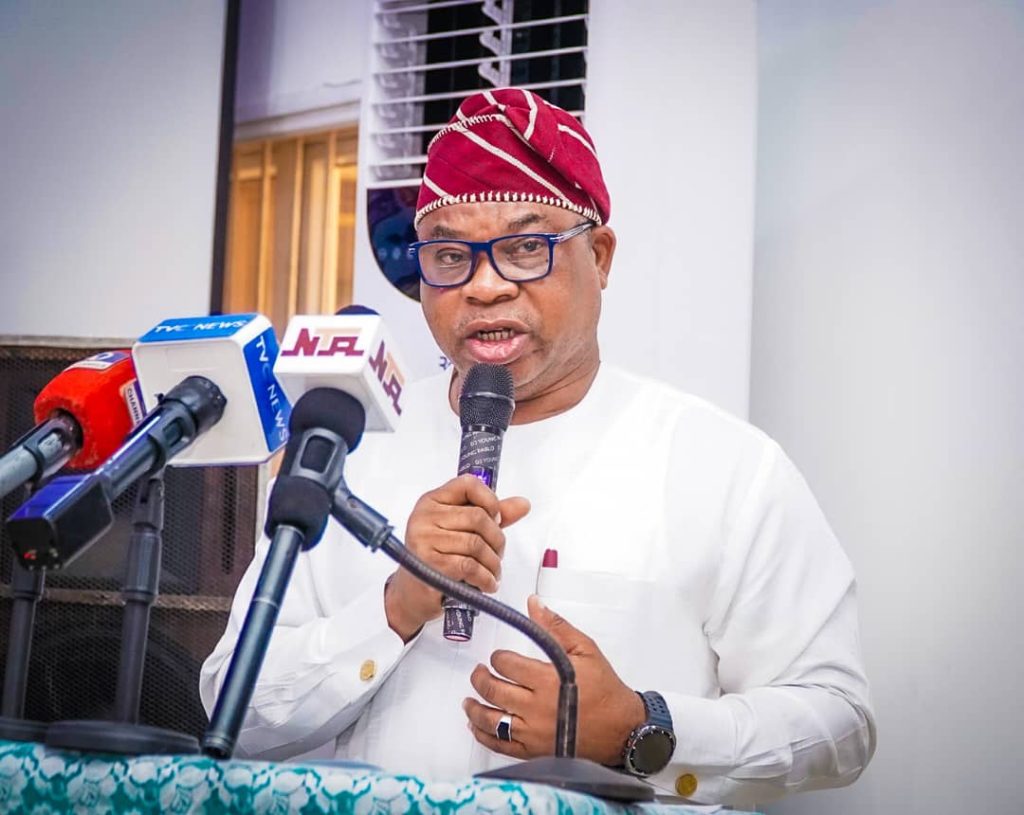
Oyetola Oyebamiji: A Trailblazer in Nigerian Public Service and Finance
Bola Oyebamiji, popularly known as Oyetola Oyebamiji, stands as a prominent figure in Nigerian politics and public administration, renowned for his extensive career in finance, governance, and community leadership. Born and raised in Ikire, the headquarters of Irewole Local Government Area in Osun State, Oyebamiji has embodied the values of resilience, integrity, and service that define much of his professional journey. His path from a young banking professional to a key influencer in state and federal affairs reflects a commitment to economic stewardship and political stability in Nigeria’s dynamic landscape.
Early Life and Education
Oyebamiji’s roots in Osun State, a region celebrated for its rich cultural heritage and agricultural vibrancy, shaped his early worldview. Growing up in a community where communal support and hard work were paramount, he developed a strong sense of responsibility toward public welfare. His academic pursuits took him to the prestigious University of Ibadan, where he earned a degree in Theatre Arts in 1987. This unconventional choice for a future finance expert highlighted his multifaceted interests, blending creativity with analytical rigor—a combination that would later define his administrative style.
While Theatre Arts might seem distant from the world of ledgers and budgets, it instilled in Oyebamiji essential skills in communication, strategic thinking, and narrative-building. These tools proved invaluable in his later roles, where articulating complex financial policies to diverse stakeholders became a hallmark of his tenure. Post-graduation, Oyebamiji pursued further professional development, though specifics on advanced degrees remain less documented, his practical expertise in banking and management filled any gaps.
Professional Beginnings in Banking
Oyebamiji’s foray into the corporate world was marked by a swift ascent in Nigeria’s burgeoning banking sector during the late 1980s and 1990s—a period of economic liberalization and structural adjustments. He joined Wema Bank Plc in 1987 as an Assistant Manager in the International Banking Division, where he honed his skills in trade finance, foreign exchange, and client relations. His tenure at Wema was foundational, exposing him to the intricacies of international transactions and risk management in a volatile economic environment.
By 1998, Oyebamiji had transitioned to Trans International Bank Plc (now part of Unity Bank) in Ikeja, Lagos, starting as a Senior Manager. His rapid progression to Principal Manager and Head of the Lagos Region by 2003 underscored his leadership acumen. In these roles, he oversaw regional operations, managed high-stakes portfolios, and navigated the challenges of Nigeria’s financial reforms under the Central Bank of Nigeria. Colleagues recall him as a meticulous strategist who prioritized ethical practices amid the era’s banking consolidations and scandals.
These early experiences not only built Oyebamiji’s technical expertise but also his network within Nigeria’s financial elite, setting the stage for his pivot to public service. His banking career, spanning over two decades, equipped him with the tools to address fiscal challenges at a governmental level, where transparency and efficiency are paramount.
Entry into Public Service: Osun State’s Economic Architect
Oyebamiji’s transition from private sector finance to public administration began in 2012 under the administration of Governor Rauf Aregbesola of the All Progressives Congress (APC). Appointed as Managing Director and CEO of the Osun State Investment Company Limited (formerly OSICOL, now Omoluabi Holdings Limited), he was tasked with revitalizing the state’s investment arm. Under his stewardship, the company diversified into real estate, agriculture, and infrastructure, injecting fresh capital into Osun’s economy and fostering public-private partnerships.
His performance earned him a promotion to Commissioner for Finance in the Aregbesola government, a role he embraced with fervor. As Finance Commissioner, Oyebamiji was instrumental in managing Osun’s fiscal health during a period of national recession. He championed innovations like the state’s Sukuk bonds for infrastructure funding and advocated for salary bailouts to alleviate worker hardships. Notably, he played a key role in ending the controversial modulated salary structure—a half-month payment system criticized for shortchanging public servants—ensuring full wage parity before the administration’s close in 2018.
Retained in the subsequent administration of Governor Gboyega Oyetola (Aregbesola’s successor), Oyebamiji continued as Finance Commissioner, where he defended the government’s record against accusations of mounting debt. In detailed rebuttals, he clarified that much of Osun’s N407 billion debt predated Oyetola’s tenure, attributing it to loans from 2013-2017 under Aregbesola. His analytical breakdowns, often shared via public statements, highlighted his data-driven approach to fiscal accountability.
In 2019, Oyetola elevated Oyebamiji to Secretary to the State Government (SSG), a pivotal advisory position. As SSG, he coordinated policy implementation across ministries, streamlining governance during Oyetola’s term, which ended in 2022 following a keenly contested election loss to Ademola Adeleke of the PDP. Oyebamiji’s tenure as SSG was marked by efforts to enhance internally generated revenue (IGR), positioning Osun as a model for fiscal prudence among Nigerian states.
Political Ambitions and Party Involvement
Oyebamiji’s public service roles intertwined with active politics within the APC. In 2018, he briefly vied for the Osun gubernatorial ticket, showcasing his aspirations for higher office. Though he withdrew to support Oyetola, the bid cemented his status as a party loyalist and strategist. Observers praised his campaign for its focus on economic empowerment and youth inclusion, themes that resonated in his later roles.
His political philosophy emphasizes unity and development over partisanship. As a chieftain, he has mediated intra-party disputes and championed grassroots mobilization, earning accolades from figures like Aregbesola and Oyetola, who described him as “enigmatic, resilient, and reliable.” Oyebamiji’s influence extends to traditional institutions; in 2018, he was turbaned as Balogun Musulumi of Irewole, Isokan, and Ayedade Federal Constituency by local Imams—a testament to his community standing.
Federal Appointments and Broader Contributions
Following Oyetola’s 2023 appointment as Minister of Marine and Blue Economy under President Bola Tinubu, Oyebamiji served as Special Adviser, leveraging his financial acumen to support maritime policies. In a significant elevation, he was appointed CEO of the National Inland Waterways Authority (NIWA), where he oversees Nigeria’s inland navigation infrastructure. This role aligns with his expertise in investment and resource management, focusing on sustainable transport solutions to boost trade.
Beyond bureaucracy, Oyebamiji is a dedicated philanthropist. Through personal initiatives and ties to the Omoluabi Foundation, he has supported education, healthcare, and youth empowerment in Osun. His efforts include scholarships for indigent students and relief for flood victims, embodying the Yoruba ethos of communal upliftment.
Personal Life and Legacy
Oyebamiji is married with children, maintaining a low-profile family life rooted in Ikire. A devout Muslim, his faith informs his ethical stance, often invoking Islamic principles of justice in public discourse. He enjoys reading economic histories and mentoring young professionals, blending his theatre background with a passion for motivational speaking.
At 60 (estimated from his 1987 graduation), Oyebamiji’s legacy is one of quiet competence amid Nigeria’s turbulent politics. Critics occasionally question his loyalty to APC administrations amid fiscal debates, but supporters hail him as a “financial wizard” who navigated Osun through economic storms. As he steers NIWA toward modernization, Oyebamiji continues to influence Nigeria’s development narrative, proving that effective governance thrives on expertise, empathy, and unwavering dedication.